Advice on how to build psychological safety in leadership teams tends to assume the problem is fear: a harsh leader, a punitive culture, people afraid to speak. The harder case is a team with no visible fear at all. Nobody is harsh, nobody is punished in the open, everyone is cordial, and almost nothing important gets said.
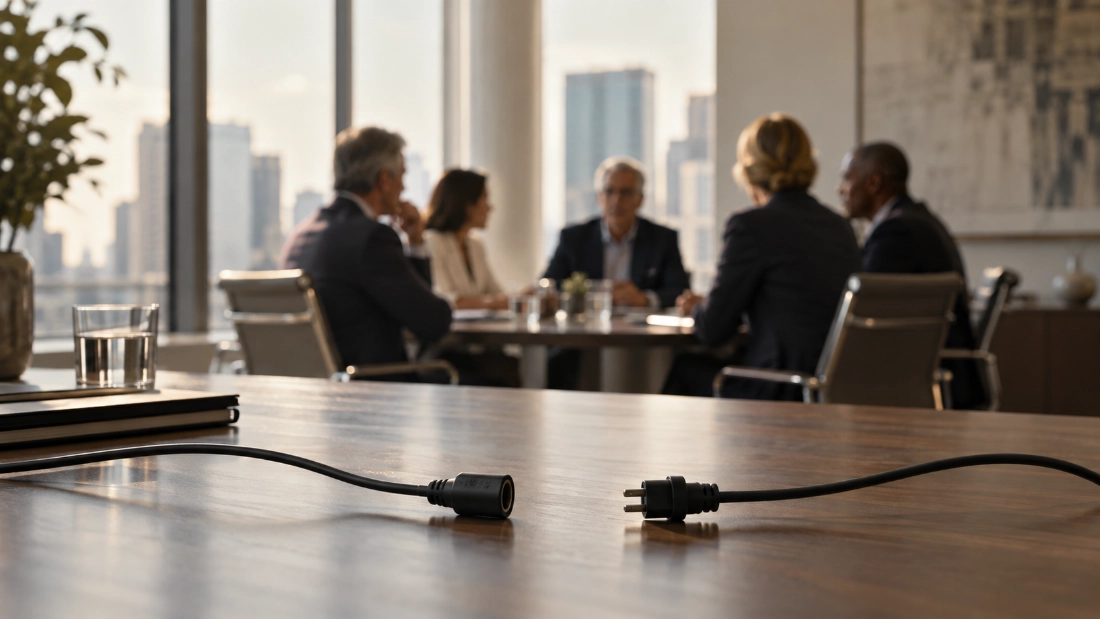
I have been in plenty of rooms like that. People are warm and cordial. They nod, they agree, and the meeting ends on time.
Then the real meeting happens afterward, in the hallway or over text, between the two people who trust each other enough to say what they actually think.
Nobody in that room would say out loud that the team is unsafe. That is what makes it so hard to change.
Is Psychological Safety the Same as Comfort?
No. Comfort is how the room feels to some. Safety is what the room permits to all.
The two rooms rarely sound alike. A comfortable room tends to be quiet: little open disagreement, and a meeting that ends in what looks like agreement. A psychologically safe room is often louder. You may hear more disagreement in it, more creative tension, more constructive conflict. And the meeting does not necessarily end in agreement. Sometimes it ends with a better question, a new perspective, or the recognition that further investigation is needed.
Harmony is easy to fake.
Candor is more complicated.
When nobody questions the senior leader or the direction the discussion has taken, the quiet can pass for alignment when it is closer to self-protection.
Volume does not settle it either. Visible disagreement on its own does not establish psychological safety. What matters is how dissent is received, whose dissent is permitted, and what happens afterward. The test is whether people can engage honestly with disagreement without putting their belonging at risk.
The word “some” carries weight in that definition as well. A room can feel entirely comfortable to the people with the most authority in it, and to the people who share their way of seeing things, while it permits very little to everyone else. A comfortable room is often comfortable for someone in particular.
What Did Google’s Project Aristotle Find About Psychological Safety?
The research supports the distinction, though it is often quoted in a way that blurs it.
Amy Edmondson, the Harvard Business School professor whose research established the concept at the team level, defined psychological safety as a shared belief held by members of a team that the team is safe for interpersonal risk taking. The operative words are risk taking. The definition describes what people are willing to attempt, not how pleasant the room feels while they attempt it. Edmondson has since said that too many people take it to mean feeling comfortable all the time.
Google’s Project Aristotle arrived at the same place from inside one company. Its people operations researchers set out to understand what made some of Google’s teams more effective than others, and concluded that who is on a team matters much less than how the team members interact, structure their work, and view their contributions. Of the five dynamics they identified, psychological safety was the most important, and Google described it in terms of risk: whether people feel confident enough to admit a mistake or offer a new idea.
Neither finding describes comfort. Both describe a team in which saying something uncomfortable is a reasonable thing to do.
What I would add to the research is ownership. Having a seat at the table is different from having a voice at it. In a psychologically safe team, your voice is counted, understood, valued, and heard, and you have some ownership, some authority, some responsibility over the decisions that affect you. Without the second half, people can speak freely and still have no reason to, because nothing they say reaches the decision.
My doctoral research studied belonging and resilience, and it taught me to ask what produces that feeling rather than whether people report having it. Belonging and psychological safety meet at exactly this point. The question underneath both is whether, after I say the difficult thing, I still belong here.
What Does a Psychologically Safe Leadership Team Sound Like?
Less comfortable, quite often. That is the part leaders tend not to expect.
A safe team sounds like this, out loud and in the meeting rather than after it:
- “I don’t agree with that.” And in response: “Okay. How do you think we should do it?”
- “I think there’s something missing here.” And in response: “Tell me more about that.”
- “I made that decision, and I got it wrong.”
- “I know we’ve already moved forward, but I think we need to reconsider this.”
- “I don’t understand why we’re doing this. What is our why?”
- “Can I push back on that?”
- “I’m seeing something different from what you’re seeing.”
Several of these come in pairs. The first sentence is the risk. The second is the room’s answer, and the answer is what tells everyone else whether the risk was worth taking.
Notice who is speaking, too. “I made that decision, and I got it wrong” does the most good coming from the most senior person present, because nobody else in the room can make that sentence safe on their behalf.
None of these sentences is aggressive. Each of them is uncomfortable, to some degree, for someone. A team that never produces them is not necessarily unsafe. It may simply have learned that the meeting is not where they get said.
Why Do Comfortable Teams Struggle to Build Psychological Safety?
Comfort reinforces itself, and the conditions that would turn it into safety are structural rather than interpersonal. Three of them matter more than the rest.
Disagreement has to be able to travel upward. Peers disagreeing with peers is the easier case. The real test is whether someone can disagree with a person who has more authority than they do, and still feel they belong afterward. That is a question about power, and examining the power dynamics in a room is part of understanding whether it is safe. A team can be candid among equals and quiet toward the top, and from the top it will look like a candid team. People also read what the organization does with what they say, and they adjust what they offer next time.
Conflict needs agreements before it arrives. Conflict is a human condition, and it will happen in any team doing work that matters. The question is whether everyone has the tools, the skills, and the agreements in place to handle it well and without causing harm. Where those are missing, the sensible choice for each individual is to avoid conflict, and a team of people each making the sensible choice produces a comfortable room. Permission to dissent compassionately has to be established in advance, because nobody can improvise it in the moment they need it.
Difference cannot carry a hidden cost. Diversity of voices, of thought, and of ideas is a large part of why a team produces better answers than any one member of it. A problem seen from several angles opens up more possibility than a problem seen from one. That only holds if the people who see differently can say so without spending tremendous energy managing the difference. When the different perspective is the one that is costly to voice, the team keeps its range on paper and loses it in the room.
None of the three is resolved by asking people to speak up more. Each is a condition, and conditions can be designed.
How to Build Psychological Safety in Leadership Teams
Building it means making discomfort survivable. What a leadership team needs is an environment where discomfort does not automatically threaten belonging.
Change is uncomfortable. Accountability can be uncomfortable. Learning is frequently uncomfortable. A team that cannot hold some discomfort in the room will still do all three, just in the hallway, or not at all.
Three things to try this month.
Listen to one meeting for the sentences rather than the outcome. Take the list above into your next leadership meeting and note which of those sentences you actually hear. Then note which ones you would have expected to hear, given what you know was said afterward. That gap tells you something an engagement score was never designed to measure.
Go first, and follow it through. Name a decision you made that turned out to be wrong, in the meeting, in plain words, without softening it into a lesson. Then do the rest: say what you are doing to correct it, repair what it cost anyone else, and keep the people it affected involved in the fix. The admission on its own proves very little. What the room learns from is the whole sequence, the truth told, the repair made, and the team better for it, with nobody looking for someone to blame.
Reopen one settled decision on purpose. Choose a decision the team has already moved past and ask, out loud, what would make us reconsider this? Then wait longer than feels natural. You are establishing the norm behind “I know we’ve already moved forward, but I think we need to reconsider this,” and the person best placed to establish it is the one with the authority to reopen things.
If all three feel easy, the team may be safer than this post assumes. If one of them feels genuinely risky to you, at your level, it is worth asking what it feels like two levels down.
Where to Start If Your Team Feels Comfortable
Whether a room is safe depends partly on what you bring into it. Several of the moments in this post ask something of the leader directly: staying open when someone pushes back, saying the true thing without softening it, preparing for the high-stakes conversation rather than avoiding it.
You LEAD is a ten-minute self-assessment of five leadership capacities that matter under pressure, from grounded presence to courageous communication. It reflects where you are now, in the context you are leading in, and ends with a growth plan for the capacity you most want to strengthen.
It also puts you on my monthly letter, where I write about what produces belonging, resilience and candor inside an organization.
Take the You LEAD self-assessment →
FAQ
What is psychological safety in a leadership team?
Psychological safety is a shared belief among team members that the team is safe for interpersonal risk taking, the definition established by Amy Edmondson. Dr. Katherine Greenland adds voice and ownership: people can disagree with someone more senior, admit a mistake, or say they do not understand, and they still belong afterward. Having a seat at the table is not enough. People need a voice at it, and some ownership over the decisions that affect them.
Is psychological safety the same as being comfortable?
No. Comfort is how the room feels to some, while safety is what the room permits to all. A comfortable team tends to avoid open conflict, with the real conversation happening afterward. A safe team often sounds less comfortable: people say things like “I don’t agree with that” and “Can I push back on that?” in the meeting itself, and a meeting may end with a better question or a decision to investigate further rather than in agreement. What distinguishes it is how dissent is received, whose dissent is permitted, and what happens afterward.
How do you build psychological safety in a leadership team?
Make discomfort survivable rather than trying to remove it. Three conditions matter most: disagreement has to be able to travel upward to people with more authority, the team needs agreements for handling conflict before conflict arrives, and voicing a different perspective cannot carry a hidden cost. A senior leader can start by naming one of their own wrong decisions in a meeting and following through on the repair, and by deliberately reopening one settled decision.
What did Google’s Project Aristotle find about psychological safety?
Google’s Project Aristotle found that who is on a team matters less than how the team members interact, structure their work, and view their contributions. Of the five team dynamics it identified, psychological safety mattered most. Google described it in terms of risk, including whether people feel confident enough to admit a mistake or offer a new idea, which describes a team where candor is possible rather than a team that is simply pleasant.
How can you tell if your team is psychologically safe?
Listen for specific sentences in meetings rather than measuring how the room feels. A safe team says things like “I made that decision and I got it wrong,” “I think there’s something missing here,” and “I know we’ve already moved forward, but I think we need to reconsider this.” If those sentences are absent from meetings and present in hallway conversations afterward, the team is more likely comfortable than safe.
Why do leadership teams agree in meetings and disagree afterward?
Because disagreeing in the meeting carries a cost that disagreeing in the hallway does not. When nobody challenges the senior leader or the premise of the conversation, it can look like alignment while actually being self-protection. Genuine alignment does not require everyone to agree: different perspectives are heard and considered, and the team understands the decision even when not everyone agrees with it. The fix is structural: agreements for handling conflict, real permission to disagree upward, and a visible signal that people who dissent keep their place in the room.